
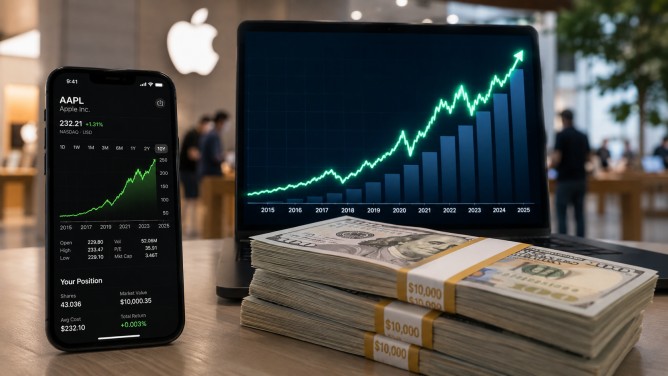
An initial investment of $10,000 in Apple back in August 2016 has remarkably grown to about $126,000 today, assuming the dividends were reinvested. This impressive growth, where the investment multiplied approximately 12.6 times over the decade, underscores Apple’s outstanding long-term performance. Much of this increase is attributed to the substantial rise in Apple’s share price, which on a split-adjusted basis, has climbed from around $27 in 2016 to approximately $311 currently. Even without reinvesting dividends, the $10,000 would have grown to nearly $115,000.
Apple’s financial strength is further reflected in its earnings. The company’s earnings per share have surged to about $8.72, up from roughly a quarter of that a decade ago. Contributing to this rise is Apple’s strategic move to reduce its share count through significant stock buybacks, thus boosting earnings per share. Another key driver of Apple’s stock performance has been its valuation; back in 2016, investors valued the company at about 13 times its earnings, whereas today, it is valued at approximately 36 times.
Looking ahead, matching this past decade’s performance could prove challenging for Apple. The current valuation of the company suggests limited scope for further major expansions in its price-to-earnings ratio. Consequently, future returns are expected to hinge more on the sustained growth of earnings. Areas such as artificial intelligence, new product developments, and Apple’s extensive installed base present potential avenues for continued growth.
However, with Apple’s considerable size, achieving rapid earnings growth will demand significantly larger increases in both revenue and profits. For long-term investors, Apple’s performance over the past ten years exemplifies the potent combination of business growth, share buybacks, and valuation expansion. Nonetheless, the future of its returns will more likely depend on the pace at which the company can boost its profits.