
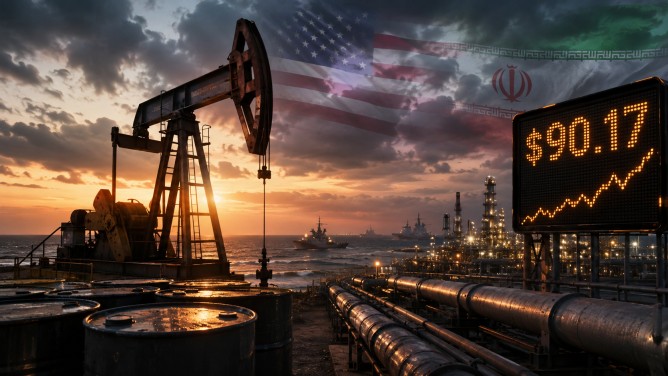
Oil prices surged significantly as the deadline for negotiations between the United States and Iran passed without reaching a peace agreement, sparking fears of ongoing conflict and potential further disruptions to global energy supplies. Brent crude prices exceeded $90 a barrel, reaching approximately $91.63, marking the highest point since July 30. This spike followed a demand from US President Donald Trump for Iran to surrender while warning of possible escalation if diplomatic efforts do not succeed.
The Strait of Hormuz, a vital corridor for global oil shipments, has become a focal point of concern, with a notable drop in the number of commercial vessels traversing the route. This decrease has heightened fears of extended interruptions to oil supplies. The situation has been exacerbated by Iran’s indication that it might take a more aggressive military approach if negotiations fail, alongside reports of an attack on a cargo vessel in the strait, raising alarms about the safety of shipping in the area.
Investors are bracing for a potentially prolonged disruption to oil supplies, with any extended closure or reduced traffic through the Strait of Hormuz likely to exert additional upward pressure on crude prices. The strategic waterway’s significance cannot be overstated, as it plays a crucial role in the global energy market.
Analysts have cautioned that the ongoing conflict in the Middle East, coupled with the war in Ukraine, could result in further shocks to global energy markets. Such developments are likely to lead to increased oil and gas prices worldwide, as the stability of energy supplies remains in jeopardy. The intertwined nature of these geopolitical issues underscores the complexity and potential volatility facing the global energy landscape.