
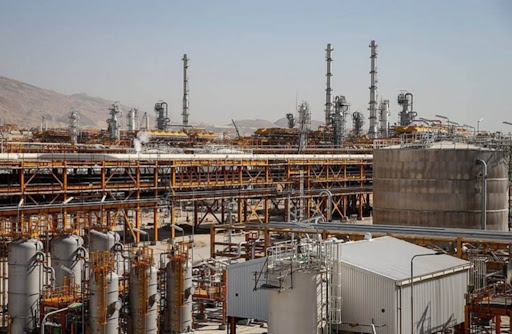
Gulf states were on high alert Wednesday evening as Iran’s Revolutionary Guards warned of imminent strikes on energy facilities in Saudi Arabia, the UAE, and Qatar — a direct response to Israeli missile attacks on the South Pars gasfield. Specific facilities were named, evacuation orders issued, and oil markets moved sharply higher. The war had entered a new phase, one defined by threats to the energy infrastructure that powers the global economy.
South Pars, co-owned with Qatar and containing the world’s largest natural gas reserves, had been left untouched throughout the conflict. The Israeli decision to strike it, reportedly approved by Washington, ended that restraint. Analysts said the move was designed to weaken Iran’s economic position, but it had also opened the door to retaliatory attacks that could disrupt energy supplies across the entire Gulf.
Iran’s state media published a list of threatened facilities: Saudi Arabia’s Samref refinery and Jubail petrochemical complex, the UAE’s al-Hosn gasfield, and Qatar’s Mesaieed and Ras Laffan facilities. Workers and residents were told to evacuate immediately. Governor Eskandar Pasalar of Asaluyeh, Iran’s gas hub, said the war had become a total economic conflict and described the Israeli attack as an act of “political suicide.”
Oil prices climbed toward $110 a barrel — a nearly 5% gain in a single session — while European gas prices jumped more than 7.5%. These moves compounded existing market stresses: Gulf oil exports had already dropped 60% from pre-war levels due to infrastructure damage and Iran’s blockade of the Strait of Hormuz. The potential for widespread Iranian strikes on Gulf energy facilities added another layer of supply risk that traders struggled to quantify.
Qatar’s government spokesperson warned that attacks on energy infrastructure constituted a serious threat to global energy security and the welfare of the region’s populations. From Riyadh to Abu Dhabi, energy ministries were assessing the situation and preparing contingency plans. The coming hours held the potential to be the most consequential in the energy conflict’s short but devastating history.
